Loading... Please wait...
Our Newsletter
- Home
- News
News
Cryoguard News
Posted on: October 2, 2023
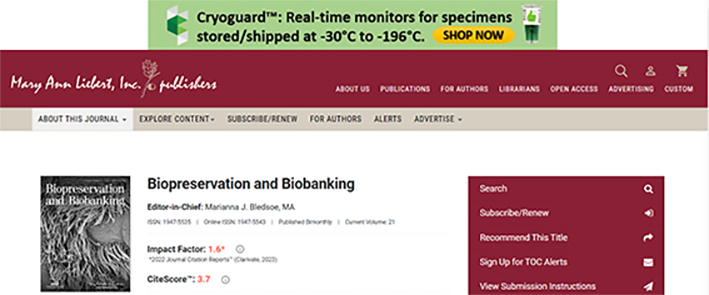
Cryoguard is featured on the webpage of Biopreservation and Biobanking Journal:
https://home.liebertpub.com/publications/biopreservation-and-biobanking/110/
Posted on: Jan 27, 2023
Our Thermal Exposure Indicators are featured on "Metoree", a product and manufacturer information comparison site for researchers and engineers. Here is the page about Cryoguard LLC on Metoree. Metoree is a product and manufacturer information comparison site for researchers and engineers that introduces a wide variety of products. The site provides useful information for engineers to compare and select products and manufacturers.
Posted on: Oct 21, 2022
Cryoguard LLC has developed three new products:
M-5 (refer to https://www.cryoguard.com/m-5/)
M-15 (refer to https://www.cryoguard.com/m-15/)
M-25 (refer to https://www.cryoguard.com/m-25/)
Posted on: Sep 16, 2021
Cryoguard LLC has developed a new product M-50. Please see more details at https://www.cryoguard.com/m-50/.
Posted on: January 16, 2019
Recently, CBS did a news story on companies encouraging young women to freeze their eggs. These companies are using a blood test to detect the amount of Anti-Müllerian hormone, or AMH, which is said to be a possible indicator of infertility.
While there are benefits in freezing eggs to preserve fertility, it is important to make sure that the facility that is storing the eggs is properly handling the samples. This past year, there have been several failures in equipment that resulted in the heart-breaking loss of hundreds of specimens. These failures have given us a glimpse into the facilities and their processes for storing and handling eggs. We have also been shown the shortcomings of these processes and alarm systems. It is necessary for facilities to reevaluate their quality systems and look into additional precautions that can be taken to prevent such a disastrous event from happening again.
As a client of these facilities, you want to make sure that they are taking every precaution to maximize the success of your procedure. The success rate of IVF procedures is 45% for women under the age of 35. That number drops drastically, to 15%, for women age 40-42. If the facility uses our Cryoguard™ Thermal Exposure Indicators, you may be able to increase your chances of having a successful IVF procedure, by precluding the use of heat damaged eggs and sperm.
To read the article on CBS follow this link:
Posted on: March 14, 2018
Use of Cryoguard Thermal Exposure Indicators might have reduced the heart breaking loss of frozen eggs caused by depletion of liquid nitrogen coolant at the Ahuja Medical Center Fertility Center in Cleveland and at the San Francisco Fertility Center - had these centers been using Cryoguard™ Thermal Exposure Indicators in freezer boxes to identify and salvage specimens that escaped potentially damaging thermal exposure.
http://www.cleveland.com/healthfit/index.ssf/2018/03/university_hospitals_notifies.html
Posted on: March, 29, 2017
Cryoguard Corporation is exhibiting at the 2017 Biomedical Research Equipment and Supplies Exhibit at Fort Detrick!
Booth #: 426
Tuesday May 2, 2017 10:00 am - 3:00 pm
Wednesday May 3, 2017 10:00 am - 2:30 pm
To learn more visit: http://www.gtpmgt.com/exhibits.php?id=1
Posted on: April 18, 2016
Cryoguard™ Indicator Interest Rises with a Pharmaceutical Commerce Article
An article in Pharmaceutical Commerce featured Cryoguard Thermal Exposure Indicators for their extended temperature range (-40°C to -150°C) and advantages over data loggers. The article mentions how the indicators give you a simple “good/no good” readout just by determining that the indicator is still green or changed color to red respectively, whereas data loggers require software and analytics. It also highlights the impressive sub-zero temperature monitoring capabilities of the indicators as well as the wide variety of customers who use this cold chain management solution and our great strides in quality control.
Pharmaceutical Commerce is a magazine published by Healthcare Commerce Media Corporation. The company focuses on providing information about business processes and technology involved in the biopharma world. They also publish two e-newsletters along with a cold chain sourcebook.
“Cryoguard extends chemical temperature indicators into deep frozen” can be read digitally by using the following link:
Posted by: Cryogal
Posted on: March 15, 2016
Cold Facts Article Features New Cryoguard™ Products!
Just recently, Cryoguard Corporation was featured in a Spotlight on a Corporate Sustaining Member Article in Cold Facts, the magazine of the Cryogenic Society of America. We are very thankful for this opportunity and we love the final product.
If you would like to read the article but do not have a Cold Facts subscription, use the following link: https://www.cryoguard.com/cold-facts-article-2016/
We hope you like it as much as we do!
Posted by: Cryogal
Posted on: December 15, 2015
Cryoguard™ Corporation Joins Social Media Trends!
That’s right! Cryoguard™ Corporation has officially jumped on the social media bandwagon with our new Facebook page and Twitter account. Like and follow us for the latest information about our company and products.
At Cryoguard Corporation, we are constantly improving upon our products for more customer satisfaction. Our new products are developed to meet your sub-zero temperature needs and to make your use of our indicators as easy as possible. We are also trying to keep our customers updated with the latest information about our company so they can make the best decisions for their company. Joining Facebook and Twitter will allow customers to keep up to date about us!
Examples of updates posted:
- New Products
- Q and A
- Company Updates
- Product Tips and Uses
- And more…
Like our page:  Click the Facebook logo and like our page to get detailed updates on your news feed each week.
Follow us:  Click on the Twitter logo and follow Cryoguard Corporation for daily updates from our company.
We look forward to reading about your companies too!
Posted by: Cryogal
Posted on: November 18, 2015
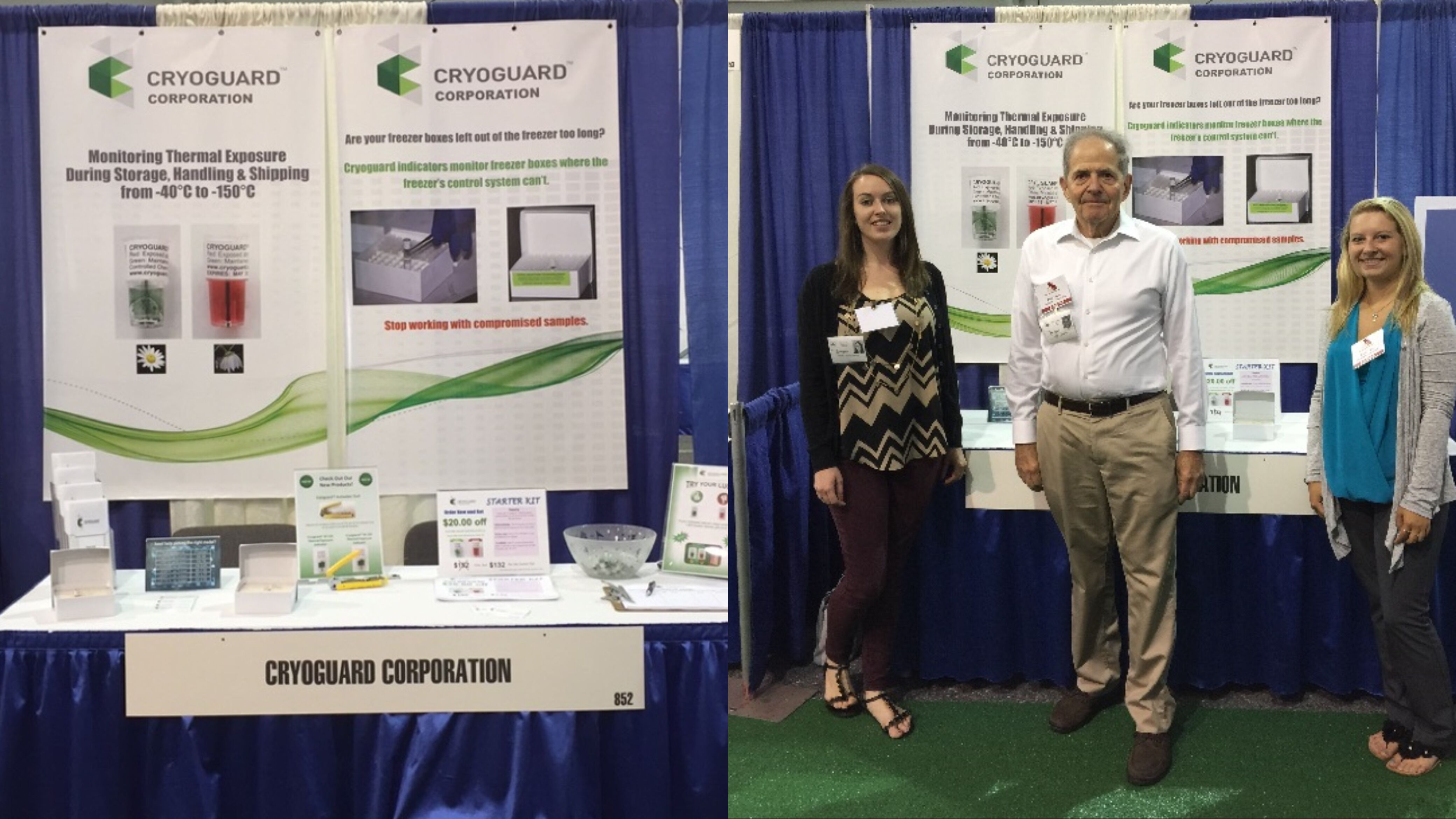
Thank you to everyone who visited us at the 2015 NIH Research Festival!
Posted by: Cryogal
Posted on: July 29, 2015
Look for us at the 2015 NIH Research Festival!
Booth#: 852
September 16 - September 18
Location: Exhibit Tent, Parking Lot #10H, adjacent to the Clinical Center NIH in Bethesda, Maryland.
To learn more visit thier website at: http://researchfestival.nih.gov/
Posted by: Cryogal
Posted on: June 17, 2015
All in the Family
In 1957, Doug Maddox and his father Rufus established RuAnn Dairy, a dairy farm with 100% Registered Holstein cattle. Currently, RuAnn Dairy houses 3,400 cows - 1,300 of which are milking cows.
Building on RuAnn’s success, the Maddox family established Maddox Dairy in 1982 to expand the family's operations. Today, with more than 4,000 milking cows, Maddox Dairy is one of the largest registered dairy farming operations in the nation.
The success of RuAnn and Maddox Dairies reflects the efforts of four generations of the Maddox family and their employees. Located in the San Joaquin Valley in California, RuAnn and Maddox Dairy's philosophy is to manage the entire herd as if they were managing one cow. Because of this philosophy, RuAnn Dairy has won premier breeder and exhibitor honors. Since its establishment, RuAnn and Maddox Dairy have produced 1200 Excellent and 10,000 Very Good cows based on the five major classification categories or “breakdowns.”
A lot of RuAnn and Maddox Dairy’s success can be credited to their very extensive embryo transplant program. The program, started in 1980, produced more than 100,000 embryos. RuAnn Dairy now serves as the foundation for both dairies’ genetics program. Each year, the dairy farm harvests 4,000-6,000 embryos.
Approximately 2,500 bull calves are born each year at the RuAnn and Maddox Dairies. Only 1% of those calves are selected for semen collection and used for herd sires. Genomics is used to facilitate selection of the best semen and cows for breeding. By selecting the best semen and cows for breeding RuAnn and Maddox Dairy continuously improve their herds generation by generation.
Daniela Demetrio, DVM who has been with the RuAnn and Maddox Dairies since 2008, is in charge of the embryo transfer programs at the dairies. With her help, the dairy farms have been able to create a herd of cattle to be proud of. RuAnn and Maddox Dairy also ship embryos and semen all over the world. The dairies are currently shipping 40,000-100,000 semen units and 1,000-2,000 embryos annually with their biggest customers being in South America.
RuAnn and Maddox Dairies use Cryoguard™ Thermal Exposure Indicators to monitor domestic and international shipments of bovine embryos and semen.
To learn more about RuAnn Dairy and Maddox Dairy, LIKE their Facebook page: Ruann and Maddox Dairy or
visit their website at http://www.maddoxdairy.com/new2011/.
Posted by: Cryogal
Posted on: August 15, 2013
Meet Our Customers: Donor Egg Bank USA
Through their network of fertility centers, Donor Egg Bank USA supplies affordable frozen donor eggs to patients. Women who have fertility issues such as poor egg quality, advanced age or are experiencing early menopause often turn to DEB USA after being advised by a physician that donor eggs are their best option for having baby. DEB USA enables women to fulfill their dreams of becoming a mother while experiencing and having control over their child’s gestation. DEB USA also offers services to same-sex couples, singles, and situations in which a gestational carrier may be needed.
I was lucky enough to talk with Heidi Hayes, the Chief Executive Officer of DEB USA. Heidi has more than 20 years of healthcare experience, and served in the United States Peace Corps in Ecuador.
DEB USA currently partners with fertility centers in eighteen states, and has recently expanded to Canada to provide services to Montreal ,Vancouver and Toronto. Partnered labs undergo vigorous training to become DEB USA Certified. “We have a stringent Quality Assurance process which involves two sessions of training, an initial central training and a secondary training in the embryologist’s home lab. Each embryologist must demonstrate mastery of the vitrification technology, and then perform on-going quality requirements,” Hayes said.
This strict process may well account for DEB USA’s high success rate. From March 1, 2012 to June 3, 2013, there have been 276 embryo transfers with a live birth rate/on-going pregnancy rate of 47% versus the average 35.7% live birth rate/on-going pregnancy rate for embryo transfers (According to the Society for Assisted Reproductive Technology)..
DEB USA’s services are easy to obtain. First, the patient needs to have a consultation and pre-screening with a physician at any of DEB USA’s partnered fertility locations. “Since Donor Egg Bank USA does not perform medical services, it is necessary for each client to be under the care of a fertility physician and other medical care professionals,” Hayes said.
Next, the patient enrolls in a DEB USA cycle plan. According to Hayes, enrollment begins with “a quick phone call to our Recipient Liaison team.” Once this process is complete, the patient selects a donor. Patients have approximately 50-65 donors to choose from. Donor profiles can be sorted by characteristics such as race, hair color and eye color. Hayes recommends “to keep an open mind and to broaden the search as much as possible…a patient may miss a donor who has a trait that runs through the donor’s family but skipped the donor. For example, is the donor the short one in an otherwise tall family?”
DEB USA carefully selects each donor based on extensive physical and psychological exams. Donors must also complete FDA Risk Assessment Questionnaires and undergo genetic testing, infectious disease testing, and other blood testing.
All donors are healthy non-smokers, between the ages of 21 and 32. DEB USA selects a donor that meets stringent qualifications and makes the donor profiles available on the website’s donor database. The information that is available about each donor includes personal history, medical history (including vision and dental), social history (including criminal), work history, family history, ancestors’ ethnic background, religion, education, skills and abilities, and much more.
DEB USA provides several options for patients to pay for the services that are offered. DEB USA developed two financial plans of which one is a money back guarantee program that may benefit patients with financial difficulties. The 100% Assured Refund Plan includes six treatment cycles for one fixed fee with a full refund if the patient does not deliver a baby. As an extra assurance, the patient can withdraw at any time and still receive a refund. There is also the Single Cycle Plan which includes one cycle treatment with a guarantee of a minimum of a 6-cell embryo at day 3 or DEB USA will provide another egg lot at no additional cost. “For [patients] that need traditional financing to pay for services, we work with CapexMD,” Hayes said. CapexMD is a loan service designed specifically for fertility treatments.
Finally, DEB USA ships the eggs to the appropriate fertility center. “Donor Egg Bank USA ships eggs overnight priority delivery. They are in the lab by 10 am the next morning. Every shipment we make has a Cryoguard [thermal exposure indicator] inside the tank to give us peace of mind that the integrity of the eggs is never jeopardized. With just a quick look, the receiving embryologist can know that the tank stayed appropriately cold during its entire journey, even during delays that can disrupt shipments such as hurricanes and snowstorms,” Hayes said.
When a patient needs to turn to fertility specialists to conceive a child or become a parent, DEB USA is an affordable option to eliminate the frustration that occurs with these situations. For more information, visit their website at www.donoreggbankusa.com.
Posted by: Cryogal
Posted on: April 15, 2013
Banking for Your Child’s Future
Cryoguard™ thermal exposure indicators are being integrated into new and diverse markets. One of these rapidly growing markets is cord blood banking.
Cord blood banking is one of the fastest growing industries in the world. In 2005, there were 23 active cord blood banks worldwide. Today, there are 485 (www.marketresearch.com). Stem cells that have been collected from umbilical cord blood have been used in numerous successful transplants. Since cord blood banking is still relatively new, researchers are finding new ways to use the stem cells everyday. By banking your baby’s cord blood, you could potentially be saving their lives in the future.
There are two types of cord blood banks: public and private. Although there is no cost to store your baby’s cord blood in a public bank, the stem cells become available to anyone who is a match and they can be sold for medical research. In a private bank, your baby’s cord blood is saved exclusively for your family.
Cord Blood Registry® (CBR®) is the world’s largest and most experienced newborn stem cell bank. Their lab has been processing and storing cord blood since 1992.
The company’s lab was established by Dr. David T. Harris, a professor of Immunobiology at the University of Arizona, Tucson. Cord Blood Registry is headquartered in San Bruno, California and their laboratory and storage facility is located in Tucson, Arizona. Their lab location is ideal for keeping your baby’s cord blood stem cells safe for years to come because in Tucson there is a decreased risk of natural disasters including earthquakes, hurricanes, floods, and tornadoes.
What does cord blood banking entail?
The procedure is quick (an average of five minutes), painless, easy, and safe for mother and child. The cord blood is collected after birth from the umbilical cord after it has been cut.
I spoke with the Cord Blood Registry’s Corporate Communications Department in California to find out more information.
Cryogal: Can you tell me a little about the company?
CBR: Cord Blood Registry is the world’s largest and most experienced newborn stem cell bank. For more than 15 years, we have led the industry in technical innovations. We are entrusted by parents with storing cord blood and cord tissue stem cells for more than 400,000 children. Moreover, CBR was the first bank to offer families in the U.S. storage of stem cells contained in cord tissue, which may help repair the body in different ways. CBR has also helped more clients use their cord blood stem cells in treatments than any other family cord blood bank. Our research and development efforts are focused on partnering with leading clinical researchers to advance regenerative medicine that may help families today and in the future.
Cryogal: What are the benefits of cord blood banking?
CBR: Cord blood is the blood in your newborn’s umbilical cord. The powerful stem cells that can be collected from the umbilical cord are used in thousands of transplants all over the world by regenerating healthy blood and immune systems. Your baby’s stem cells are unique. Plus, they’re pristine, more flexible and easier to collect than stem cells from bone marrow. They have been used in the treatment of more than 80 life-threatening diseases, including anemia, leukemia and certain other cancers, blood, immune, and metabolic disorders. They’re also being evaluated in human clinical trials for their potential to help treat conditions like brain injury and autism that have no cure today. It is shown in laboratory studies that cord blood stem cells are smart enough to be able to “track down” the body’s injured cells and tissue to begin the healing process. Stem cell uses continue to grow and evolve, bringing new hope to families.
There is no data to prove that stem cells deteriorate with time. Therefore, it is believed that, under the proper conditions, cord blood stem cells can be stored indefinitely.
Cryogal: What is the cost of cord blood banking with CBR?
CBR: Initial fees are $1,995, which include collection, one-step shipping to our laboratory, processing, and first year of storage. An annual fee of $130 is charged each year following your baby’s first birthday.
If the cost of cord blood banking seems a little pricey, why not try CBR’s gift registry? In lieu of a gift registry at your local Babies R’ Us or Target, you can set a registry up online at CBR’s website and tell friends and family about it. They can then donate money towards the cost of cord blood banking. Instead of getting clothes and toys that you may never use, they can contribute to possibly saving your child’s life.
CBR is not just for people living in the United States. They currently store children’s stem cells from over 80 countries.
Cord Blood Registry will also ship your stem cells to any physician in the world who operates under the proper protocol for the use of the stem cells. In order to ensure that the cord blood cells are safe during shipping, CBR uses Cryoguard™ Thermal Exposure Indicators together with data loggers to monitor cryoshippers during transit.
If you would like more information on Cord Blood Registry and cord blood banking, visit www.cordblood.com
Posted by: Cryogal
Posted on: June 25, 2012
Taking Out a Puppy ‘Insurance Policy’
Straws to Paws in New Jersey offers semen freezing for dogs
Dog owners often wish their pets could live forever. In a way, they can thanks to cryopreservation. Just as men can visit a sperm bank to preserve their fertility, dog owners can have their dog’s semen frozen to ensure the next generation of puppies.
Dog semen can be frozen and stored indefinitely at facilities such as Straws to Paws in the town of Washington in New Jersey, Straws to Paws co-owner Debbie Leach said. Some owners choose to keep their dog’s semen on ice (or more accurately in liquid nitrogen) for a few years before using it in their breeding programs. Others wait longer. In fact Leach said Straws to Paws once successfully inseminated a female dog with semen that had been stored frozen for 23 years. The dog gave birth to 13 puppies.
“We see excellent litter size with frozen semen just as you would with normal, natural breeding,” Leach said.
There are many reasons why a dog owner might choose to freeze his or her dog’s semen.
“Most of our clients are dog breeders,” Leach said. “We do have the occasional pet person who really wants to save semen on their dog because they want to neuter their dog but, someday, they would like to have a puppy.”
For example, breeders may have their dogs’ semen frozen before taking the dog to a hot climate for field trials (heat can negatively impact a dog’s semen quality). Another client who was in the midst of a divorce knew his wife would be keeping their sheep dog, so he had the dog’s semen frozen so he could get a genetically-similar puppy.
For these reasons and more, frozen semen is becoming an increasingly hot commodity around the world. Leach said Straws to Paws ships semen to locations near and far upon the client’s requests.
“One of the nice things about frozen semen is you can freeze semen on a dog and export that semen to a foreign country that doesn’t have access to the lines you have here in the United States,” she said.
For example, Straws to Paws has exported Borzoi semen to New Zealand, where import restrictions would have made it difficult and expensive to import the dog itself (the semen produced 19 puppies).
Likewise, clients from all over the world have shipped semen to Straws to Paws for use in breeding. Straws to Paws and the adjacent Pleasant Valley Veterinary Services offer a full line of reproductive services including ovulation timing of the female dog’s cycle, collection of semen for fresh artificial insemination, fresh chilled breeding and, of course, the use of frozen semen.
Currently Straws to Paws houses semen from hundreds of dogs in thousands of straws. The semen is kept inside liquid nitrogen tanks at -196 degrees Celsius. It is shipped in liquid nitrogen “dry shippers” – special containers that use liquid nitrogen vapor to keep the semen at subzero temperatures for a week or longer.
Leach and veterinarian Dr. Mary Stankovics started Straws to Paws six years ago. Leach’s interest in semen freezing dates back to her work with breeding guide dogs for The Seeing Eye in Morristown New Jersey, where she was involved in starting a semen freezing program. Stankovics has a special interest in reproductive services as well, and is a member of the Society for Theriogenology.
Semen freezing is highly regulated. Straws to Paws gained its certification through Synbiotics, a subsidiary of Pfizer, Inc. The American Kennel Club oversees and regulates frozen semen used for breeding. To further ensure the quality of the semen, Straws to Paws videotapes every freezing session.
Freezing semen is like an “insurance policy” for dog breeding, Leach said. Age, heat, Lyme disease or even the stress of the show circuit can take a toll on a dog’s semen quality. That’s why it’s best to freeze a dog’s semen when the dog is young, Leach said.
“If you freeze a dog’s semen when they’re a year old, it looks fantastic,” she said. “As they age, the sperm cells are less able to handle freezing at -196 degrees. That being said, we’ve frozen semen on older dogs who have done just great, so it really does depend on the dog.”
With cryopreservation, the semen remains available long after the dog becomes infertile or dies. Freezing a valuable dog’s semen can create peace of mind for the breeder.
“If you have that dog’s semen frozen, you know you’ll always have it,” Leach said.
Posted by: Cryogal
Posted on: April 4, 2012
Math Yields a Fresh Perspective on Freezing Cells
Dr. James Benson discusses his longtime interest in cryopreservation and new role with the Society for Cryobiology
It wasn’t your average summer job. When James Benson was in high school, he spent a summer helping his older brother with doctoral research on the cryopreservation of pancreatic islet cells. Benson enjoyed the data analysis, and wound up spending several more summers working for his brother’s advisor, John Critser, at the Indiana University School of Medicine. Today, cryobiology continues to be an academic interest for Benson. He recently began a two-year term on the Society for Cryobiology’s Board of Governors. Benson, 34, is an assistant professor in the Department of Mathematics at Northern Illinois University in Dekalb, Illinois. I took a look at his curriculum vitae, and noticed his research covers topics that are pertinent to our mission here at Cryoguard. He was willing to chat with me about his new role in the Society for Cryobiology, his doctoral work on the optimization of cryopreservation protocols, and his findings related to stem cell lines.
The annual election in November brought an influx of new members to the Society for Cryobiology’s Board of Directors, said Gloria Elliott, the society’s newly-elected treasurer. “There’s a generation of young scientists who are joining the board and bringing their vision for the future of the society,” she said. Benson, who started his term in January, will fill a seat that opened up when Erik Woods was elected President-Elect for the society. Benson has been a member of the society since 2003 and has several ideas for changes and advancements. For example, he would like to see the society broaden its membership by bringing in scientists in related disciplines (such as biophysicists who work in low temperatures and physical chemists who work in low temperatures or high concentrations.) “There’s a need for more input from the clinical side of things,” Benson said. “Although there are clinical members of the society, I think the more members who are [involved in clinical practice], the more impact they will have on the direction of the society.” As the new Student Awards Committee Chair for the Society for Cryobiology, Benson plans to limit the number of contestants the annual oral presentation contest, which takes place at the society’s annual meeting. He said that while it was exciting to have a large number of student participate, this made judging and scheduling impractical. Now, participants will be asked to submit extended abstracts, which will be scored by the student awards committee. The top four scorers will receive invitations to compete in the contest.
Benson earned a Ph.D. in math from the University of Missouri in 2009 and his thesis was titled “Mathematical Problems from Cryobiology.” “My dissertation was about the optimization of cryopreservation protocols,” Benson said. “I cast the classic problems of cryobiology in the context of the class of mathematical problems called optimal control problems.” One of his topics included optimizing the addition and removal of cryoprotectants from reproductive cells. “In all these cell types, there are maximal and minimal volumes to which the cells can swell and shrink,” he said. “Sperm are particularly sensitive, especially when you get into some of the animal species. Oocytes are more sensitive than embryos, and stem cells seem to be the most robust.” Benson applied mathematical models and theory to show how to add and remove cryoprotectants optimally without exceeding these volume limits, either safely minimizing protocol time or, more recently, concentration-induced toxicity.
Benson’s growing body of research has a heavy focus on cryobiology, including several papers on cryopreservation protocols for stem cell lines. As noted in “Improved Cryopreservation Methods for a Mouse Embryonic Stem Cell Line,” published in Cryobiology in 2008, embryonic stem cell lines are crucial to programs that seek to create mutant mouse strains for the production of human disease models in biomedical research. Efficient cryopreservation for storage and transport of the cell lines is vital to the success of the programs. Benson said research has showed that propylene glycol is superior to DMSO when similar protocols are applied for cryopreserving the mouse embryonic stem cell lines. Substituting propylene glycol, he said, can yield double the recovery, with at least 30 to 40 percent more recovery expected. Currently, Benson’s research is focused on translating his mathematical models into concrete protocols for cryopreservation in the laboratory.
Posted by: Cryogal
Posted on: Jan. 31, 2012
How Do You Use Cryoguard?
Find out how Seattle Cancer Care Alliance has been applying Cryoguard indicators
I spoke with Leslie Radtke, performance improvement lead at Seattle Cancer Care Alliance about how the Seattle, Washington, facility has been using Cryoguard indicators. Most recently, the SCCA has been using Cryoguard indicators as a back up to a new data logger, she said.
The SCCA has been applying Cryoguard indicators for years to monitor shipments of stem cells, Radtke said. Typically, the Cryoguard indicators monitor peripheral blood stem cell products, she said. Sometimes the facility also employs Cryoguard indicators to track shipments of cord blood and bone marrow products.
Seattle Cancer Care Alliance is a world-class cancer treatment center that unites doctors from Fred Hutchinson Cancer Research Center, UW Medicine and Seattle Children's, the company’s website says. Some treatments require the collection of stem cells from patients. Cryoguard indicators come into the picture when a patient has moved and needs those stem cell products shipped to the new location (for example, for a second transplant). In other cases, the SCCA freezes and stores stem cell products for smaller medical centers that don’t offer those services. “They’ll ship it to us for cryopreservation, we’ll freeze it and eventually ship it back to them when the patient is ready for transplant,” Radtke said.
Folks at the Seattle Cancer Care Alliance ship the stem cell products in liquid nitrogen vapor shippers. Specifically, they use one of the MVE XC models from Chart Biomed with a data logger lid.
“They originally sold us just a vapor shipper with a normal lid,” Radtke said. “They now offer a lid with a data logger on top and a probe that comes down through the Styrofoam cap and hangs down into the cavity.”
The data logger lid is a good modification, Radtke said, because standards set forth by the Foundation for the Accreditation of Cellular Therapy require continuous temperature monitoring of stem cell products during shipment. If a temperature excursion occurs, the data logger provides information on when it happened and how long it was going on, Radtke said.
“Because the data logger lids are new to our process,” she said, “we chose to keep using the Cryoguards until the datalogger lids have passed performance qualification testing.”
Lab Staff at SCCA place the Cryoguard indicator in a 50 mL conical tube, which is what they use to contain any cryovials. The conical tube(s) goes on top of the product bags (within metal cassettes). Currently, the SCCA is using Cryoguard indicators in conjunction with the data logger.
Posted on: Jan. 17, 2012
Posted by: Cryogal
Cryoguard Joins LinkedIn
LinkedIn offers many different forums, including the Cell Therapy Industry Group
I’m excited to announce that Cryoguard Corporation joined LinkedIn.
Follow us! Click on the icon to see our profile: 
Having recently joined LinkedIn, I discovered the Cell Therapy Industry Group. If you work for/own a cell therapy company or conduct research in stem cells, you should take a look at this group.
Here’s a summary of what the Cell Therapy Industry Group is all about, courtesy of a phone interview with founder Lee Buckler.
What: Cell Therapy Industry Group.
Members: Nearly 2,400.
Who has joined: Folks involved with cell therapy companies and stem cell research.
When started: July 2008.
Founded by: Lee Buckler, founder and managing director of the Cell Therapy Group, a consulting firm focused on the cell therapy and regenerative medicine industry. The firm is based in the U.S. and Canada.
What it is: As described on LinkedIn: “The Cell Therapy Industry group was created to serve as a network of those in the regenerative medicine industry and cell therapy sector. The group is intended to act as a vehicle for referrals, networking, sharing info, and facilitating collaboration.”
Why founded: When LinkedIn started offering groups, Buckler thought a cellular therapy group had the potential to be an important forum for the exchange of information and ideas between people on the industry side of cell therapy. “So many of these professional organizations primarily serve academics and academic researchers,” he said. “At the time, and it’s still true to some extent, the companies in the cell therapy world were rather disconnected and disparate. Cell therapy is not one modality. I think we have felt the need to try and increase network points and intersections of information.”
Examples of hot topics discussed:
- Removal of dimethyl sulfoxide, or DMSO (a frequently-used cryoprotectant), and other “post-thaw” issues related to cell products such as post-thaw washing.
- Ongoing discussions on how cell therapies are being regulated in different countries. “One of the hot button issues is the regulation of autologous cell therapies,” Buckler said.
- A wide range of commercially-oriented discussions related to financing, deals and partnerships.
How to join: Log into your LinkedIn account (or join LinkedIn, if you haven’t already at www.linkedin.com). Search “groups” for “Cell Therapy Industry Group.” Click on “Join Group,” and your request to join the group will be submitted for consideration.
Posted on: Jan. 6, 2012
Posted by: Cryogal
Avoiding Cross Contamination in the IVF Lab
What can embryologists learn from livestock studies? Get an inside look at Dr. Kimball Pomeroy’s upcoming discussion at the Southwest Embryology Summit.
In the mid-1990s, microbial cross contamination became a hot topic after a bone marrow bag apparently leaked inside a liquid nitrogen tank, contaminating the liquid nitrogen and other bone marrow samples stored inside. As a result, six transplant patients treated at a British hospital contracted Hepatitis B from the infected bone marrow. The incident, though isolated, sparked a larger conversation about the dangers of microbial cross contamination during the shipping and storage of cryopreserved materials.
On Monday, Dr. Kimball Pomeroy plans to explore how cross contamination relates to assisted reproduction during a talk titled “microbial cross contamination during storage in liquid nitrogen – what can livestock teach us?” His talk will be part of the brand new Southwest Embryology Summit in Las Vegas. It will be geared toward embryologists who work in fertility clinics across the southwestern U.S. I chatted with Pomeroy to get a preview of his presentation.
Cryogal: What is cross contamination as it relates to storage in liquid nitrogen?
Kimball Pomeroy: Cross contamination refers to a bacteria or virus on one reproductive sample escaping from its container, getting into a nearby container and infecting another tissue that was not previously contaminated with the virus or bacteria.
Cryogal: Why is microbial cross contamination in liquid nitrogen of interest to scientists at fertility clinics?
K.P.: Eggs, embryos and semen are stored in liquid nitrogen or nitrogen vapor during shipping and storage.
Cryogal: Why use animal studies as a reference?
K.P.: There’s so much more information. We’ve been working with eggs, embryos and semen with livestock for a much longer time than with humans . . . They have taken [cow] embryos and exposed them to bacteria and viruses and transferred them into other cows and checked to see if the cows became infected and the offspring became infected. There are experiments you just can’t do on humans to test these theories out.
Cryogal: What can livestock teach us about cross contamination of reproductive specimen in liquid nitrogen?
K.P.: When we look through all the records of animal species, for example cattle species where there have been millions of vials of semen frozen, there is no history of cross contamination using the containers or tissues we use. There is a particular virus, Bovine Viral Diarrhea Virus or BVDV [a virus that suppresses the cow’s immune system.] The virus is found quite often all through the cattle industry, and it can have a big impact on the health of your herd. Yet there is not one instance we know of where there has been cross contamination when they have used semen stored in tanks where it could have been exposed to BVDV.
Cryogal: What does the (human) IVF industry do to prevent cross contamination?
K.P.: I think the biggest thing done is screening of patients. We screen our patients for sexually-transmitted diseases. A lot of the time cross contamination is not an issue mainly because the tissue we recover has almost no blood whatsoever. We also dilute out these tissues many times as we’re using different drops.
Cryogal: What else do you expect your audience to discuss?
K.P.: I’m sure a large part of the discussion is going to be on open and closed containers for storing tissue. With open containers, tissue is exposed to liquid nitrogen, and that increases the risk of cross contamination but it’s never been shown to happen . . . The alternative is a closed system, where there is, unfortunately, an insulated area of air around that piece of tissue that slows down the cooling and warming rates, but it protects it [the tissue] from being contaminated by liquid nitrogen. Liquid nitrogen is not purified. Whatever is in liquid nitrogen theoretically could contaminate the tissue.
Cryogal: Is storage in liquid nitrogen vapor preferable when it comes to reducing the risk of cross contamination?
K.P.: One of the big movements for a while was: People were looking at vapor storage tanks for storing large amounts of tissue. There are a lot of people that question whether those methods are going to be suitable, especially for vitrified specimen. They may be fine for slow-cooled specimen. Will they be able to keep vitrified specimens at the proper temperature? Do they actually remove the risk of cross contamination? I don’t think either of those has been adequately shown.
=====
Details…
What: Discussion on microbial cross contamination
Presenter: Kimball Pomeroy, laboratory director and co-owner of Arizona Reproductive Medicine Specialists in Phoenix, Arizona. Read his bio here.
When: 2-3 p.m. Pacific Standard Time, Monday, Jan. 9, 2012
Where: Mandalay Bay Resort and Casino, Las Vegas, Nevada
Open to: Registered Southwest Embryology Summit attendees (registration is full)
More info: www.southwestembryologysummit.com
=====
Posted by: Cryogal
Posted on: 1/3/2012
New Event Offers Networking Opportunity for Embryologists
Southwest Embryology Summit is Jan. 8-9 in Las Vegas
Have you heard about this cool new event? The Southwest Embryology Summit kicks off Jan. 8-9, 2012, at the Mandalay Bay Resort and Casino in Las Vegas, Nevada. Registration is full (it had been capped at 50 people) but this won’t be your last chance to attend; organizers hope to make the summit an annual happening!
The ‘Next Generation’ of Embryologists
Marlane Angle, laboratory director for Laurel Fertility Care in San Francisco, California, is among a group of IVF professionals in the southwestern U.S. who organized the summit *. She said the event has two purposes: networking and education. Lab directors are responsible for making sure the embryologists under their supervision obtain continuing education credits and move up within the field, Angle said. This is particularly pressing as several laboratory directors in the southwestern U.S. near retirement.
“It’s about this point we all start thinking about: who’s going to be the next generation?” Angle said. “I think a lot of this industry is connections, who you know. The meetings we’ve all traditionally gone to are getting bigger and bigger . . . Most of them are run and directed by physicians. You tend to go for political reasons. It’s really hard to develop contacts with your peers. All of us are seeing junior people coming up. We want to make sure they have forums for education and forums for networking.”
The Southwest Embryology Summit will be just such a forum. In the interest of keeping the summit as affordable as possible, organizers set registration fees at $50, planned the event in Las Vegas during the offseason, obtained special room rates and recruited industry sponsors. About 10 vendors will promote their products at tables inside the meeting room. There is no registration deadline for becoming a sponsor.
Because the attendance was capped at 50 people, event-goers should get plenty of face-to-face contact. Several exciting discussions on the schedule promise to spark lively debate. Each presentation will last about 15 minutes. A half hour of discussion will follow.
Presentations include:
* Keynote Speaker: Jonathan Van Blerkom, Ph.D.
Topic: "Molecular remodeling of the plasma membrane during mouse and human oocyte maturation and early embryogenesis"
* Speaker: Michael Reed, Ph.D., HCLD
Topic: "Practical, technical approaches to human embryo culture: room for improvement"
* Speaker: Levent Keskintepe, Ph.D., HCLD
Topic: “Oocyte vitrification: Ups and downs"
* Speaker: Kimball Pomeroy, Ph.D., HCLD
Topic: “Microbial cross-contamination during storage in liquid nitrogen - What can livestock teach us?"
* Speaker: Marlane Angle, Ph.D., HCLD
Topic: "The medium’s the message: Quality control in the IVF lab"
A full schedule can be found here: http://www.southwestembryologysummit.com/
The Great pH Debate
During her talk on quality control, Angle plans to cover pH levels as they relate to the culturing of embryos. pH is important because it can affect embryo development and pregnancy rates. “If you look historically, we all started culturing our embryos at a pH of 7.4, because that’s blood pH,” Angle said.
However, there has been some research, particularly from Jay Baltz at the Ottowa Hospital Research Institute, that suggests the intracellular pH of embryos is lower than the pH of blood; for example, research showed the intracellular pH of a mouse embryo is more like 7.12, Angle said.
“Our embryology techniques derive from cell culture techniques, so when you try to measure the intracellular pH of most cells held in culture, it mimics blood cultures, which is 7.4, so the assumption was that human embryos and the blastomeres of embryos were going to do the same thing.”
What scientists have found is that even though other cell types might have intracellular pHs of 7.4, embryos don’t, Angle said. And that’s why the industry has moved to a pH of 7.25 for culturing embryos.
“The point I’m trying to make is: Just because we’ve always done things a particular way doesn’t mean we always should do things that way. One of the things we need to start rethinking is how we culture our embryos. I think there is a movement out there to lower the pH of our culture environment.”
If you are interested in learning more about the Southwest Embryology Summit, visit www.southwestembryologysummit.com or email Marlane Angle at drangle@laurelfertility.com.
* Other founders of the Southwest Embryology Summit include: Levent Keskintepe, executive laboratory director at the Sher Institute for Reproductive Medicine in Las Vegas; Kimball Pomeroy, laboratory director and co-owner of Arizona Reproductive Medicine Specialists in Phoenix, Arizona; and Michael Reed, laboratory director for the Center for Reproductive Medicine of New Mexico in Albuquerque, New Mexico.
Heading to the Southwest Embryology Summit?
I checked in with Jeremy Handel, senior manager of public affairs with the Las Vegas Convention and Visitors' Authority, to find out what Vegas is like this time of year. As you can see from the photo below, Mandalay Bay is right on the southern tip of the strip.
Cryogal: What is the weather usually like in early January in Las Vegas?
Jeremy Handel: While Las Vegas enjoys an annual average temperature in 70s, early January can be cooler with highs in low 60s and overnight lows in the 40s.
Cryogal: Anything special you would recommend packing for a trip to Vegas in January?
J.H.: Two things I would always recommend for that time of year is a jacket or coat and comfortable shoes to experience the destination on foot.